

Digital Twins
Digital Twin vs BIM: What’s the Difference and Which Does Your Project Need?


Written by: Maram Obaid
 3 min read
 AI Summary
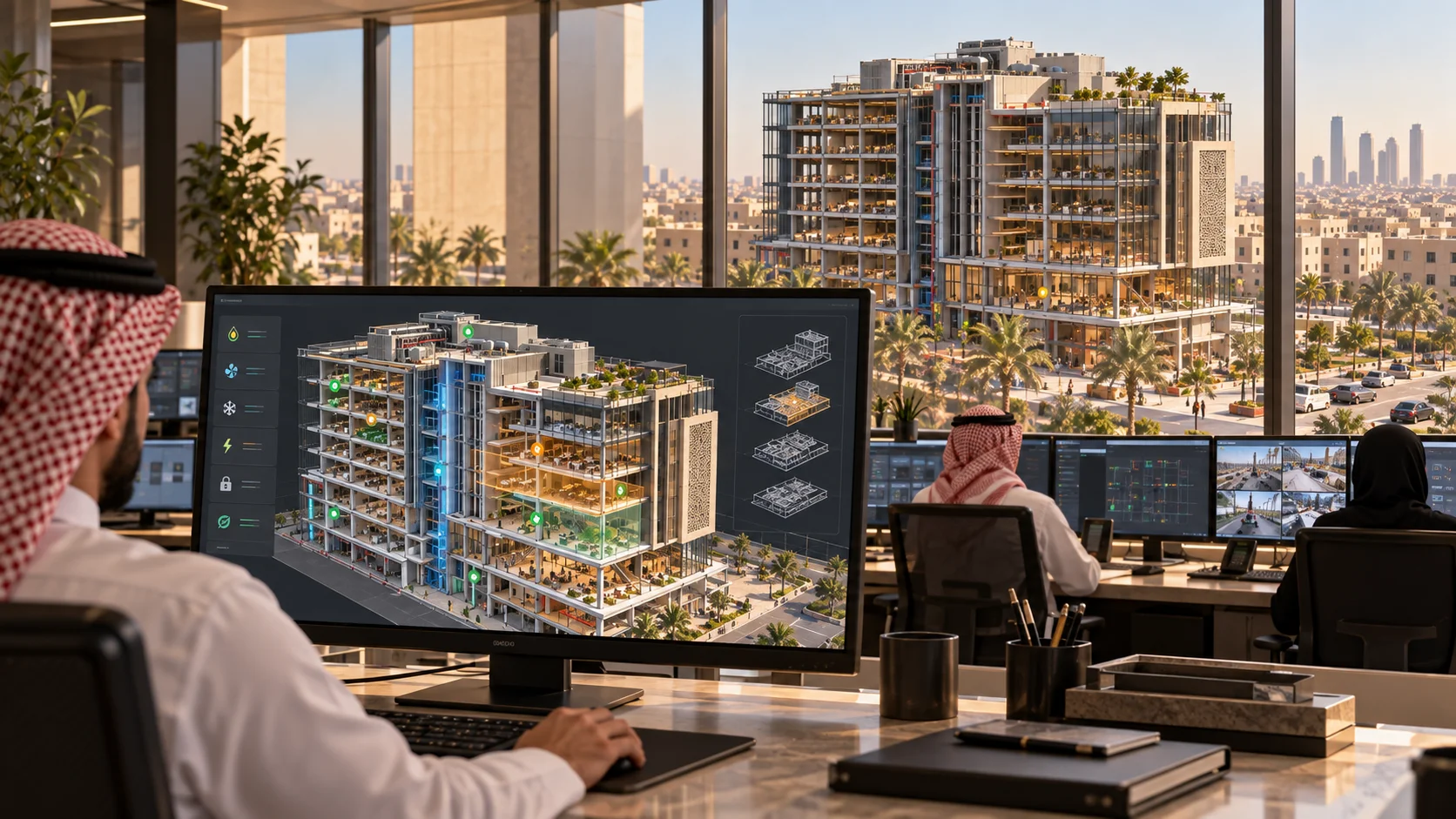
Digital Twin vs BIM: What’s the Difference and Which Does Your Project Need?
As construction becomes more digital, BIM and digital twins are changing how projects are designed, built, and managed. While both create digital representations of physical assets, they serve different purposes.
A BIM Model supports planning, design, coordination, and construction, while a digital twin connects a digital representation to real-world data to monitor and optimize an asset.
So, what’s the difference between BIM and digital twins for construction projects, and when should you use one, the other, or both?
What Is a BIM Model?
A BIM Model is a digital representation of a building or infrastructure project. It combines physical elements with project information, giving architects, engineers, and contractors a shared view of what they are designing and building.
Unlike a basic 3D model, BIM can contain information about materials, systems, dimensions, quantities, and other project elements. This makes it valuable for coordinating teams and managing information throughout design and construction.
How Does BIM Work?
BIM brings project information into a shared digital environment. Teams can use the model to understand how different elements fit together, identify potential issues, and coordinate their work before problems reach the construction site.
In simple terms, BIM helps teams understand, coordinate, and plan a project before and during construction.
What Is BIM Used For?
BIM can help project teams:
- Visualize the project before construction begins.
- Coordinate architectural, structural, and engineering designs.
- Identify clashes between different building systems.
- Manage project information in one place.
- Plan construction more efficiently.
Its main value is giving teams a shared and organized view of the project, helping them make better decisions before construction progresses.
What Is a Digital Twin?
A digital twin is a virtual representation of a real-world building, facility, or infrastructure asset. Unlike a model that simply represents an asset, a digital twin can be connected to data from its physical counterpart and evolve as conditions change.
This makes digital twins particularly useful for monitoring, managing, and optimizing assets beyond the construction stage.
How Does a Digital Twin Work?
A digital twin work connects a physical asset to its digital counterpart through technologies such as IoT devices, sensors, building management systems, and other data sources.
The collected information is brought into the digital environment, allowing teams to monitor conditions, identify changes, and make more informed decisions.
The basic process is:
Physical Asset → Connected Data → Digital Twin → Insights → Action
What Are Digital Twins Used For?
Depending on the project, digital twins can help teams:
- Monitor facilities and critical systems.
- Track equipment and assets.
- Identify potential problems earlier.
- Plan maintenance more effectively.
- Improve energy and resource usage.
- Optimize day-to-day operations.
For large buildings and infrastructure, this provides a more informed way to manage an asset throughout its operational lifecycle.
Digital Twin vs BIM: What’s the Difference?
BIM and digital twins both create digital representations, but their roles within a project are different.
BIM focuses on planning and construction. It organizes the design, components, and information teams need to coordinate and deliver a project.
A digital twin focuses on the physical asset in operation. It connects the digital representation to real-world data, helping teams understand how the asset is performing and where improvements may be needed.
The distinction is simple:
BIM describes what is being designed and built. A digital twin helps show what is happening with the asset once it is in use.
BIM vs Digital Twin for Construction Projects
The right approach depends on the project stage, objectives, and level of connectivity required.
BIM is a strong choice when you need to:
- Visualize and develop designs before construction.
- Coordinate architectural, structural, and engineering teams.
- Detect clashes and design issues early.
- Centralize project information.
- Improve construction planning and coordination.
A Digital Twin is a strong choice when you need to:
- Monitor a completed building or infrastructure asset.
- Connect systems, equipment, and operational data.
- Identify potential issues early.
- Support predictive maintenance.
- Improve energy use and operational efficiency.
When Should You Use Both?
For large or complex developments, BIM and digital twins can complement each other.
BIM supports the project during design and construction, while a digital twin can build on that information once the asset becomes operational.
In simple terms: BIM helps you build it. A digital twin helps you understand and optimize it.
How BIM and Digital Twins Work Together
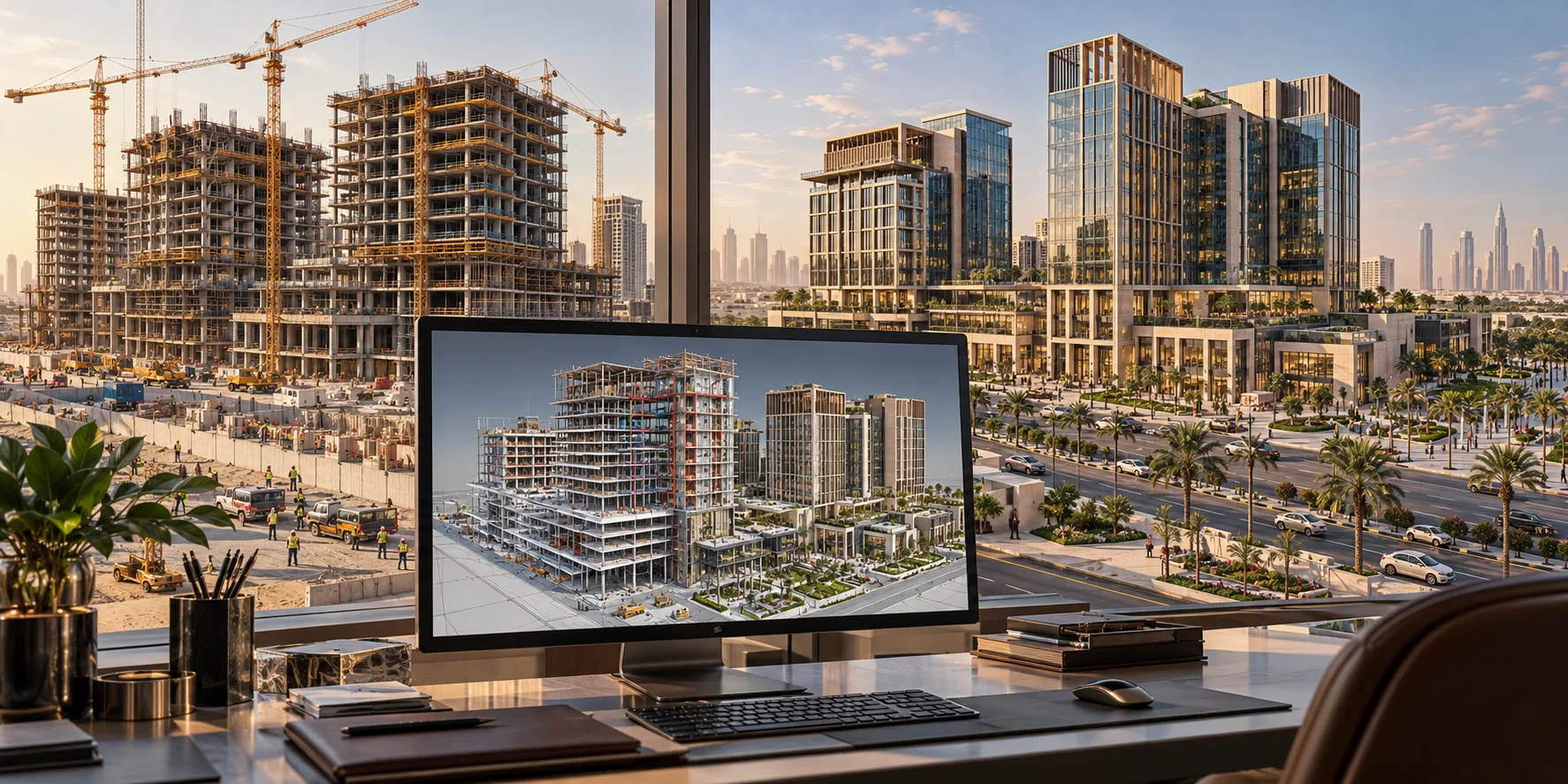
BIM and digital twins can form a connected workflow across different stages of a project.
A BIM Model can provide the digital foundation. Once the physical asset is built, that information can be connected to IoT devices, sensors, building systems, and other data sources.
This creates a connected workflow:
BIM → Connected Data → Digital Twin → Insights → Optimization
Instead of treating design, construction, and operations as completely separate stages, this approach allows valuable project information to continue into the asset's operational lifecycle.
Digital Twin Solutions in Saudi Arabia
Saudi Arabia is developing smart cities, large-scale infrastructure, and digitally connected developments, creating new opportunities for digital twin solutions across the built environment.
Digital twins can help developers, facility managers, and infrastructure teams gain greater visibility into complex assets, including building performance, maintenance, energy use, and daily operations.
For large and evolving projects, they can provide a connected digital layer that supports smarter planning, real-time insights, and more efficient asset management.
As Saudi Arabia continues its digital transformation, digital twins can play an important role in creating more connected and data-driven built environments.
How to Choose the Right Technology for Your Project
Choosing between BIM, a digital twin, or both starts with understanding what you need the technology to achieve.
Consider:
- Project stage: Is the project being designed, constructed, or already operational?
- Project complexity: Larger and more connected assets may benefit from both technologies.
- Data availability: Digital twins depend on relevant real-world data and connected systems.
- Business goals: Are you focused on coordination, construction planning, monitoring, maintenance, or optimization?
- Long-term needs: If you want to manage an asset digitally beyond construction, a digital twin may provide greater value.
For many projects, the answer isn't BIM or digital twin. A project may use BIM during design and construction and then build on that foundation with a digital twin during operation.
The Future of BIM and Digital Twins
BIM and digital twins are helping move construction toward a more connected approach to the built environment.
As AI, IoT, real-time data, and XR become more integrated with digital models, these technologies can help teams move beyond simply representing buildings toward understanding how they perform.
This can support faster, more informed decisions across design, construction, and operations.
For developers and asset owners, the opportunity is not simply to create a digital model, but to build a digital environment that evolves alongside the physical asset.
How Narsun Studios Approaches Digital Twins
At Narsun Studios, we combine digital twins, AI, XR, and real-time data to create connected digital environments tailored to specific project and business needs.
Our approach goes beyond creating a digital representation. We focus on how technology can help businesses visualize assets, understand their environments, and make better decisions.
From construction and real estate to infrastructure and immersive environments, the right solution depends on the project's goals, scale, available data, and lifecycle.
The goal is simple: connect the physical and digital worlds to create smarter, more useful environments.
Conclusion
BIM and digital twins serve different purposes, but together they can create a more connected approach to construction and asset management.
BIM helps teams design, coordinate, and build, while digital twins extend that digital foundation into operations, using real-world data to monitor and optimize assets.
For construction and infrastructure projects, the right solution depends on the project stage, goals, complexity, data, and long-term needs.
The goal isn't simply to choose between BIM and a digital twin. It's about using the right technology at the right stage to create greater value throughout the asset's lifecycle.
Build the digital foundation with BIM. Then use digital twins to make the physical asset smarter.
FAQ’s
Is a digital twin the same as BIM?

Is a digital twin the same as BIM?
Can BIM be used to create a digital twin?
Can BIM be used to create a digital twin?
Which is better for construction: BIM or a digital twin?
Which is better for construction: BIM or a digital twin?
Do digital twins require BIM?
Do digital twins require BIM?
What are digital twin solutions used for?
What are digital twin solutions used for?
Are digital twins useful for construction projects?
Are digital twins useful for construction projects?
Does Narsun Studios provide digital twin solutions in Saudi Arabia?
Does Narsun Studios provide digital twin solutions in Saudi Arabia?

Book a discovery call & let’s discuss a custom solution!
Trusted by clients worldwide.
Published on: 2026-09-28
Published By: Maram Obaid