

Immersive Technologies
Top 10 Future Immersive Technologies in 2026


Written by: Maram Obaid
 3 min read
 AI Summary
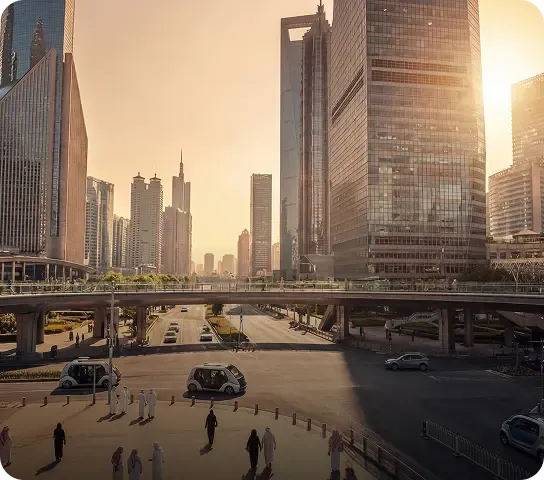
Top 10 Future Immersive Technologies in 2026
Immersive technology is evolving faster than ever, redefining how businesses engage customers, train teams, and create unforgettable digital experiences. By 2026, immersive systems will no longer be confined to gaming or entertainment, they will become essential tools across industries such as tourism, retail, education, healthcare, and smart cities.
From AI-driven virtual experiences to advanced virtual worlds, the next generation of immersive technology is creating smarter, more interactive realities that adapt to users, environments, and business needs.
In this blog, we explore the top 10 future immersive technologies in 2026 and how they are shaping the future of digital transformation worldwide.
Why Immersive Technology Matters in 2026
Immersion is no longer a luxury, it is a strategic tool for organizations aiming to connect with audiences in meaningful ways. Intelligent immersive systems allow businesses to provide personalized experiences, simulate real-world scenarios, and improve operational efficiency.
Here's why immersive technology is gaining prominence in 2026:
- Enhancing Customer Engagement
Immersive experiences capture attention and create memorable interactions, making brands more relatable and engaging.
- Interactive Training Environments
VR and AR allow employees to practice skills safely in realistic scenarios, from healthcare procedures to industrial operations.
- Storytelling and Marketing
Immersive media makes storytelling interactive and emotionally compelling, helping brands communicate more effectively.
- Realistic Digital Simulations
Organizations can test designs, infrastructure, and products in a virtual environment before real-world deployment.
- Supporting Smart Infrastructure Projects
Immersive systems integrated with AI and digital twins assist in planning, monitoring, and managing urban projects and large-scale enterprises.
The future of immersive innovation relies on combining AI, spatial computing, real-time interaction, and advanced hardware to create experiences that are both intelligent and intuitive.
Top 10 Future Immersive Technologies in 2026
1. AI-Driven Virtual Experiences
Artificial intelligence is revolutionizing immersion. AI-driven virtual experiences adapt in real-time to user behavior, preferences, and even emotional cues.
Key applications include:
- Virtual assistants in VR spaces that guide users through complex environments or product catalogs.
- AI-powered training simulations that adjust difficulty levels based on performance.
- Personalized tourism experiences, such as interactive guided tours that change according to the visitor's interests.
AI not only makes immersive experiences more interactive but also scalable, allowing businesses to deliver customized experiences to large audiences simultaneously.
2. Advanced Virtual Worlds for Business
Advanced virtual worlds are becoming central to enterprise operations. Companies are no longer limited to simple VR meetings; entire digital ecosystems are being created for collaboration, marketing, and operations.
Applications include:
- Hosting meetings and conferences in fully immersive 3D environments, enhancing collaboration among remote teams.
- Creating virtual showrooms where customers can explore products in interactive detail.
- Building branded digital destinations for marketing campaigns, customer engagement, and events.
These virtual worlds foster deeper engagement and more interactive experiences, enabling enterprises to differentiate themselves in competitive markets.
3. Smart Immersive Technology in Theme Parks and Events
The entertainment industry is rapidly adopting smart immersive technology to transform visitor experiences.
Examples include:
- AR navigation systems guiding visitors through theme parks or large exhibition spaces.
- Immersive projection mapping that transforms physical spaces into dynamic visual stories.
- Interactive storytelling zones where visitors influence narratives through their actions.
These innovations not only enhance enjoyment but also improve operational efficiency by managing visitor flow and engagement.
4. AI-Enhanced Reality (AR + AI Integration)
AI-enhanced reality is an evolution of traditional augmented reality. By integrating AI, AR experiences become context-aware, adaptive, and highly personalized.
Capabilities include:
- Object recognition, enabling smart identification and interaction with physical objects.
- Real-time translation, providing multilingual overlays in live environments.
- Personalized digital layers, showing tailored content based on user preferences.
Industries benefiting from AI-enhanced reality include retail, tourism, smart cities, and even healthcare, where AR assists in surgeries or medical training.
5. Advanced Immersive Systems for Training and Education
Education and workforce training are becoming increasingly immersive. Advanced immersive systems allow learners to engage in realistic simulations without the risks of real-world practice.
Key industries include:
- Healthcare, where VR simulations improve procedural skills.
- Aviation, providing pilots with risk-free flight training.
- Oil and gas, allowing safe practice in hazardous environments.
- Corporate learning, where employees can explore interactive scenarios.
Immersive training improves knowledge retention, safety, and efficiency, making it a core strategy for enterprise learning programs.
6. Next-Generation Immersion Tech with Haptic Feedback
Touch is entering the immersive realm. Haptic feedback technology allows users to feel virtual objects, textures, and forces.
Applications include:
- Medical simulations for surgical training.
- Immersive gaming with tactile sensations.
- Product testing in VR, enabling realistic evaluations before physical manufacturing.
Haptics bridge the gap between digital and physical experiences, making immersion more convincing and memorable.
7. Spatial Computing and Mixed Reality Workspaces
Spatial computing is changing how humans interact with digital content in the real world. Mixed reality workspaces allow virtual elements to coexist seamlessly with physical environments.
Benefits include:
- Anchoring digital objects in real environments for design, construction, or training purposes.
- Facilitating collaborative workspaces, where teams interact with 3D content in real time.
- Enabling interactive design and engineering tools for rapid prototyping.
Spatial computing combines physical awareness, real-time interaction, and 3D visualization, making it one of the most transformative immersive technologies.
8. Intelligent Immersive Systems Powered by Digital Twins
Digital twins are virtual replicas of physical environments. When paired with immersive technology, they allow real-time simulation, monitoring, and interaction.
Use cases include:
- Smart city planning, enabling planners to visualize infrastructure in virtual space.
- Infrastructure monitoring, detecting anomalies and predicting maintenance needs.
- Virtual facility management, optimizing operational efficiency before making real-world decisions.
Combining digital twins with immersive experiences enables interactive simulations that are realistic and highly actionable.
9. Immersive Commerce and Virtual Shopping Experiences
Retail is rapidly adopting immersive experiences to improve customer engagement and decision-making. Immersive commerce transforms shopping into interactive and personalized journeys.
Applications include:
- Virtual try-on experiences for clothing, accessories, or eyewear.
- 3D product showrooms allowing customers to explore products in detail.
- AI-driven shopping assistants offering recommendations in real time.
These solutions increase customer confidence, reduce product returns, and create memorable shopping experiences.
10. Hyper-Personalized Immersive Storytelling
Storytelling is no longer linear. Hyper-personalized immersive storytelling adapts to user emotions, decisions, and actions.
Applications include:
- Cultural heritage tourism, where visitors experience history interactively.
- Brand storytelling campaigns that respond to audience engagement.
- Interactive museums, where exhibits react to visitor behavior.
Personalized immersion creates emotional resonance, deepening engagement and making experiences unforgettable.
Industries Leading Immersive Adoption in 2026
Immersive systems are now mainstream across multiple sectors:
- Entertainment and theme parks: engaging visitors with smart experiences.
- Tourism and hospitality: offering interactive tours and experiences.
- Smart city development: planning and monitoring urban environments.
- Enterprise training: reducing risk while improving learning outcomes.
- Retail and e-commerce: creating interactive and personalized shopping.
- Healthcare and simulation: enhancing medical training and procedures.
Demand for next-generation immersive technology continues to grow globally, especially in regions investing in AI, digital twins, and smart infrastructure projects.
How Narsun Supports Future Immersive Innovation
At Narsun, immersive experiences are crafted to help organizations connect meaningfully with audiences, clients, and communities.
Narsun develops solutions such as:
- AI-driven virtual experiences that adapt to user behavior.
- Advanced immersive systems for enterprise operations and marketing.
- Interactive AR/VR installations for events, exhibitions, and tourism.
- Smart immersive technology for theme parks and large venues.
- Digital twin-powered immersive environments for urban planning and facility management.
With innovation accelerating, Narsun ensures businesses stay ahead by combining AI, immersive technology, and interactive design.
Conclusion
In 2026, immersive technology, from AI-enhanced reality to virtual worlds, has become a key driver of business growth, training, and user engagement. Investing in intelligent immersive systems today helps shape the experiences of tomorrow and gives organizations a lasting competitive advantage.
As digital transformation continues, the future of theme parks and large-scale experiences relies on innovation powered by AI, AR/VR, IoT, and smart platforms. These technologies enable more interactive and personalized experiences while improving operational efficiency and ensuring high standards of safety and sustainability.
By partnering with Narsun Studios, organizations can build AI-driven virtual environments and immersive solutions that inspire audiences and create lasting impact.
Elevate your digital experiences today—discover Narsun Studios’ smart solutions.
FAQ’s
What are advanced immersive systems?

What are advanced immersive systems?
How is AI driving virtual experiences?
How is AI driving virtual experiences?
What industries benefit from intelligent immersive systems?
What industries benefit from intelligent immersive systems?
What is AI-enhanced reality?
What is AI-enhanced reality?
How is immersive technology used in theme parks and events?
How is immersive technology used in theme parks and events?
What is the role of digital twins in immersive systems?
What is the role of digital twins in immersive systems?
Why is immersive technology important for businesses in 2026?
Why is immersive technology important for businesses in 2026?

Book a discovery call & let’s discuss a custom solution!
Trusted by clients worldwide.
Published on: 2026-03-17
Published By: Maram Obaid